
If your dog has started limping, slowing down, or favoring one of their back legs, it’s important to have them evaluated by your primary care veterinarian or a board-certified veterinary surgeon. One of the most common orthopedic conditions affecting dogs is injury to the cranial cruciate ligament (CCL)—a condition similar to ACL injuries in people.
The cranial cruciate ligament connects the thigh bone (femur) to the shin bone (tibia) at the knee joint, known in veterinary medicine as the stifle. When this ligament becomes damaged or ruptured, the knee becomes unstable, painful, and difficult to use normally. Without appropriate treatment, CCL injuries can significantly affect your dog’s comfort, mobility, and long-term joint health.
One of the most effective treatments for this condition is tibial plateau leveling osteotomy (TPLO). At Boundary Bay Veterinary Specialty Hospital in Bellingham, our world-class, board-certified surgeons perform TPLO surgery routinely and provide comprehensive perioperative and postoperative care to support excellent outcomes.
The Cranial Cruciate Ligament: Why It Matters
The cranial cruciate ligament is the canine counterpart to the human anterior cruciate ligament (ACL). In both dogs and people, injuries to these ligaments are common—and painful.
Ligaments are strong, fibrous bands of tissue that stabilize joints by connecting bones and controlling motion. In the knee, cruciate ligaments cross within the joint to limit abnormal movement and maintain stability during weight-bearing and activity.
Dogs have four primary ligaments stabilizing the stifle joint, with the CCL being the most commonly injured.
Why Do Dogs Tear Their CCL?
Unlike people, dogs usually do not need a dramatic injury or athletic trauma to rupture their CCL. In most cases, CCL rupture results from a chronic, degenerative process rather than a single event.
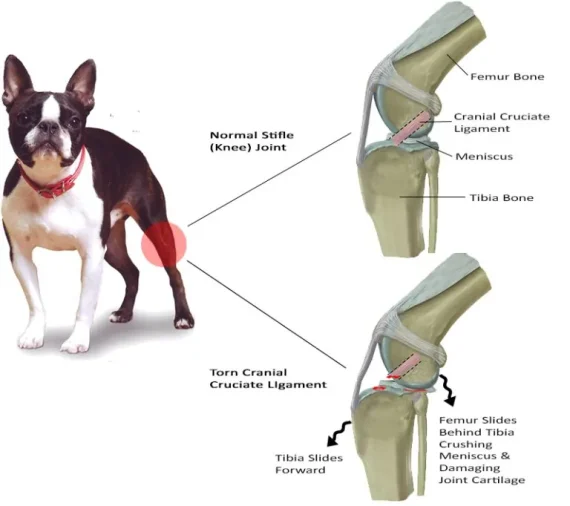
Several biomechanical factors contribute:
- Dogs walk with their knees more flexed than humans
- The top of the tibia has a natural slope, called the tibial plateau slope
- During weight-bearing, this slope causes the tibia to push forward
- The CCL normally resists this forward movement. When the ligament weakens or tears, abnormal joint motion occurs, leading to pain, inflammation, cartilage damage, and progressive arthritis.
Inside the knee is a cartilage structure called the meniscus, which helps cushion the joint. When instability develops, the meniscus can become pinched or torn, worsening pain and lameness.
Risk factors for CCL injury include:
- Obesity
- Poor body conformation
- Advancing age
- Genetic predisposition
- Certain breeds, including Golden Retrievers and Rottweilers
Dogs that are under-conditioned may actually be at higher risk due to reduced muscle support around the knee. Maintaining a healthy weight and regular, appropriate exercise remains the best preventive strategy, although no method completely eliminates risk.
Recognizing the Signs of Cranial Cruciate Ligament Disease
Because CCL injury often develops gradually, veterinarians frequently refer to it as cranial cruciate ligament disease (CCLD). A complete rupture represents the most advanced stage of the disease.
Dogs with CCLD may show one or more of the following signs:
- Difficulty rising from a seated position
- Difficulty sitting squarely (“positive sit test”)
- Reluctance to jump or climb into the car
- Reduced activity or interest in play
- Limping that may worsen after periods of rest
- Muscle loss in the affected hind leg
- Decreased range of motion in the knee
- Clicking or popping sounds from the joint (often associated with meniscal injury)
- Firm swelling along the inside of the tibia
- Stiffness and persistent pain
Dogs may not vocalize their discomfort, but chronic lameness and changes in mobility are clear indicators of pain.
How Is Cranial Cruciate Ligament Disease Diagnosed?
Diagnosing CCLD involves a combination of medical history, gait evaluation, orthopedic examination, and imaging.
A complete rupture can often be suspected based on physical exam findings and abnormal joint motion. Partial tears can be more difficult to identify, particularly in anxious or very large dogs. Radiographs (X-rays) are usually recommended. While the ligament itself cannot be seen on X-rays, imaging provides critical information about the joint.
Radiographs allow your veterinarian to:
- confirm the presence of a soft tissue opacity consistent with joint effusion (fluid accumulation, mostly inflammatory in nature, in the stifle joint, indicating an abnormality)
- evaluate the presence and degree of arthritis
- take precise measurements for surgical planning
- rule out concurrent orthopedic or medical conditions
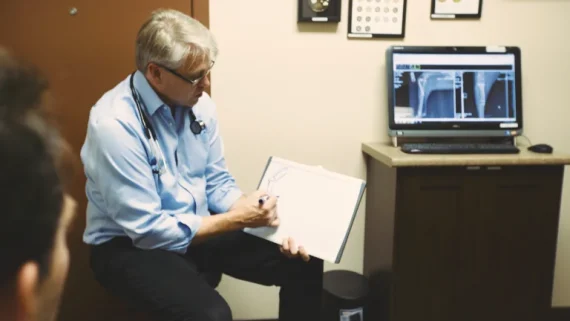
Veterinarians also use specific palpation techniques to assess the CCL, including the cranial drawer test and the tibial compression test. These tests can confirm abnormal motion within the knee that is consistent with CCL rupture.
Definitive confirmation of ligament injury is made by direct visualization, either through arthroscopy (using a small fiber-optic camera) or arthrotomy (a small incision into the joint).
Before surgery or prescribing anti-inflammatory medications, bloodwork is typically performed to assess your dog’s overall health and anesthetic safety.
Treatment Options for CCLD
Treatment options fall into two broad categories: non-surgical management and surgical stabilization. The best approach depends on your dog’s size, activity level, anatomy, degree of instability, and overall health.
Non-surgical management may include:
- Pain and anti-inflammatory medications
- Strict activity modification
- Joint supplements or joint injections
- Physical rehabilitation
- Bracing or orthotics
While some dogs can improve with conservative care, surgical stabilization provides the most reliable long-term outcome, particularly for medium to large dogs and active pets.
The most commonly recommended surgical procedure is TPLO.
Our Bellingham surgical team will discuss all appropriate options and help determine the best plan for your dog.
What Is TPLO Surgery?
Tibial plateau leveling osteotomy (TPLO) stabilizes the knee by altering biomechanics rather than attempting to repair the damaged ligament itself.
TPLO decreases the angle at the top of the tibia, which reduces or eliminates the force pushing the tibia forward during weight-bearing. This removes the need for the CCL to prevent that motion.
During surgery, a portion of the tibia is carefully cut and rotated, then secured with a specialized plate and screws while the bone heals. This prevents the femur from sliding down and off the tibial surface.
In more than 95% of cases, the implants remain in place permanently. Implant removal is rarely required and typically only occurs due to infection. If removal is necessary, it does not compromise the long-term stability achieved by the surgery.
To see how this works visually, watch CCL Tears and How a TPLO Surgery Works.
Recovery and Life After TPLO
Dogs will typically stay overnight with us and go home the day after a TPLO. This approach helps reduce psychological stress for both pets and owners while keeping overall costs lower.
This 24-hour in-hospital aftercare ensures patients are fully recovered from anesthesia, comfortable on medications you will administer at home, and beginning to use the affected leg appropriately as local anesthetic blocks wear off.
During their stay, patients are under the care and supervision of board-certified critical care specialists, with access to additional board-certified specialists on an on-call basis if needed.
Recovery is generally rapid. Many dogs begin bearing weight within days, and after a period of controlled activity as directed by your surgeon, most return to the activities they enjoyed before their injury.
TPLO has been performed for more than 20 years, with outcomes overwhelmingly positive and supported by extensive scientific research.
Is TPLO the Right Choice for My Dog?
Determining whether TPLO is appropriate is a collaborative decision involving you, your primary care veterinarian, and your surgical specialist.
Factors considered include:
- Overall health and age
- Body condition and weight
- Presence of arthritis or other orthopedic conditions
- Ability to participate in postoperative care and rehabilitation
While TPLO stabilizes the knee, it cannot reverse arthritis or unrelated joint problems. Meniscal injuries or other issues may be addressed at the time of surgery if identified. Pre-existing conditions can affect long-term outcomes, and these will be discussed during your consultation.
Our team will guide you through every step of the recovery process and develop an individualized rehabilitation plan to help your dog achieve their best possible function.
Why Choose a Board-Certified Veterinary Surgeon?
Veterinary surgery is a highly specialized field. Board-certified veterinary surgeons complete a minimum of four additional years of advanced training after veterinary school, focusing exclusively on surgical disease, advanced procedures, and complication management.
This level of training ensures expertise in diagnosis, surgical technique, and postoperative care.
At Boundary Bay Veterinary Specialty Hospital in Bellingham, all TPLO procedures are performed by board-certified surgeons using advanced diagnostic imaging, arthroscopy when indicated, and a wide range of implant options suitable for dogs of all sizes and anatomies. Our specially trained veterinary nurses (Licenced Veterinary Technicians) provide advanced anesthetic monitoring, including for patients with underlying medical conditions. We also offer in-house physical rehabilitation services to support recovery.
Here When You Need Us
If your dog has been diagnosed with a cranial cruciate ligament injury—or if you suspect they may be developing one—our Bellingham team is here to answer your questions and help you determine the best treatment path for your pet.
About Boundary Bay Veterinary Specialty Hospital – Bellingham
Boundary Bay Veterinary Specialty Hospital in Bellingham, Washington provides specialty veterinary care and emergency services for pets throughout northwest Washington.
Our Bellingham hospital offers specialty services including surgery, oncology, internal medicine (including endoscopy), cardiology, advanced diagnostic imaging (CT and ultrasound), and animal rehabilitation, and provides 24-hour emergency veterinary care in partnership with Animal Emergency Care.
Frequently Asked Questions About TPLO Surgery in Dogs
What is TPLO surgery for dogs?
TPLO (tibial plateau leveling osteotomy) is a surgical procedure used to stabilize the knee in dogs with a torn cranial cruciate ligament (CCL). Instead of repairing the ligament, the surgery changes the biomechanics of the knee so it can function normally without the ligament.
Why do dogs need TPLO instead of ligament repair?
In most dogs, cranial cruciate ligament injury is caused by a degenerative process rather than a single traumatic event. Because the ligament tissue is weakened, repairing it directly would not provide a lasting solution. TPLO stabilizes the joint by eliminating the forces that cause instability, providing more reliable long-term results.
How do I know if my dog has a torn CCL?
Common signs include limping on a back leg, difficulty rising or sitting, reluctance to jump, decreased activity, stiffness after rest, and muscle loss in one hind leg. A veterinarian diagnoses CCL injury through physical examination, specific orthopedic tests, and imaging such as X-rays.
Can a dog walk with a torn cruciate ligament?
Yes, many dogs will still walk with a torn CCL, but they are experiencing pain and instability. Continued weight-bearing without treatment can worsen arthritis and joint damage over time.
How is a CCL injury diagnosed?
Diagnosis involves a combination of gait evaluation, orthopedic examination, and radiographs (X-rays). Veterinarians may perform the cranial drawer test or tibial compression test to assess abnormal knee movement. Definitive diagnosis is made through direct visualization of the ligament using arthroscopy or arthrotomy.
What do X-rays show with a cruciate ligament injury?
Although the ligament itself cannot be seen on X-rays, radiographs help confirm joint inflammation (effusion), evaluate the presence and severity of arthritis, rule out other conditions, and allow precise measurements needed for surgical planning.
Is TPLO surgery painful for dogs?
Pain is carefully managed using multimodal pain control, including local anesthetic blocks, medications, and close postoperative monitoring. Most dogs are comfortable after surgery and begin using the leg within a few days.
How long does it take a dog to recover from TPLO surgery?
Initial recovery occurs within weeks, with most dogs bearing weight within days. Full recovery typically takes several months and includes a period of restricted activity followed by gradual rehabilitation, as directed by your veterinary surgeon.
Will my dog need to stay overnight after TPLO surgery?
Yes. Dogs typically stay overnight and go home the day after surgery. This allows for monitoring as anesthesia wears off, ensures pain is well controlled, and confirms the dog is beginning to use the leg appropriately before returning home.
Are the plates and screws removed after TPLO surgery?
In more than 95% of cases, the implants remain in place permanently. Removal is rarely necessary and usually only occurs if there is an infection. Removing the implants does not affect the long-term stability of the knee.
Is TPLO surgery safe for older dogs?
Age alone does not determine whether a dog is a good candidate. Overall health, body condition, and the presence of other medical conditions are more important factors. Bloodwork and pre-surgical evaluation help determine anesthetic safety.
Are there alternatives to TPLO surgery?
Yes. Other surgical options include TTA, CBLO, CCWO, TightRope®, and the Flo technique, which are offered at our sister hospital in Surrey, BC. Non-surgical management may be appropriate for some dogs. A board-certified veterinary surgeon can help determine the most appropriate treatment for each individual dog.
Can TPLO fix arthritis in my dog’s knee?
TPLO does not reverse existing arthritis, but it can significantly reduce pain and slow the progression of arthritis by stabilizing the joint and eliminating abnormal movement.
What happens if a torn CCL is left untreated?
Without treatment, knee instability leads to progressive arthritis, chronic pain, muscle loss, and reduced mobility. Secondary injuries, such as meniscal tears, are also more likely to occur.
Why should a board-certified veterinary surgeon perform TPLO surgery?
Board-certified veterinary surgeons complete extensive additional training focused exclusively on advanced surgical procedures. This specialized training supports precise surgical technique, complication management, and optimal outcomes for complex orthopedic surgeries like TPLO.
